
Approach
We don’t start with a discipline. We start where the business stops moving forward.
SEO, Ads, design, software or AI can all be part of the answer. They are never the question. First we look at what needs to work better, at the point where the result is being lost, and at which part has to change for the whole to move.
- Demandwho arrives, and whyMoving
- Experiencewhat they understand and decideMoving
- Operationswhat happens once they say yesMoving
- Progress stops hereThe next three aren’t failing. Nothing is reaching them.
- Datawhat gets recordedReceiving nothing
- Decisionwhat gets done differentlyReceiving nothing
- Resultwhat the business takes awayReceiving nothing
Not a sum of services
Doing many things is not the same as making them work together.
We can work on acquisition, on experience, on technology, or on the work someone is doing by hand today. That does not mean all four go into every project: what goes in is what solves the problem, connected to what was already working.
‘We keep spending more on acquisition and the cost per opportunity keeps going up.’
- Growthin
- Experiencenot in
- Technologynot in
- Intelligencenot in
The website and the sales team are not touched. What changes is which demand comes in and what signal the campaign sends back.
‘Every order, every job and every project is tracked on a different spreadsheet, and nobody knows how one is going until somebody asks.’
- Growthnot in
- Experiencenot in
- Technologyin
- Intelligencein
Acquisition stays as it is. What changes is where the work happens and how much of it a person has to do by hand.
‘People come in, ask for a price, and then we never hear anything about them again.’
- Growthin
- Experiencein
- Technologyin
- Intelligencenot in
There is a website and there are campaigns already. What is missing is for an opportunity to have a status, an owner and a next step.
An intervention can be one capability or several. It is rarely all four, and never just because they exist.
Where we start
The bottleneck decides.
A business does not perform at the level of its best part: it performs at the level of what the narrowest one lets through. That is why strengthening something that already had capacity to spare can change nothing, and why the first thing we look for is where the real limit sits.
- Acquisition
- Conversion
- Sales
- Operations — The limit
- Repeat business
- AcquisitionWidening here does not change the flow.
- Conversion
- Sales
- The limitOperationsWidening here changes everything.
- Repeat business
More traffic does not fix an experience that does not convert. A new website does not recover the opportunities lost after it. More sales do not fix an operation that cannot absorb them. Automating a badly defined process only makes it faster. And more reporting does not fix data that arrives wrong.
We work first where an improvement changes the result of the whole.
Why there are four capabilities
The same signal. Four different problems.
What a company notices is a symptom, and a symptom does not say where the cause is. The four capabilities are not four departments: they are four ways of reading the same thing, and each one leads somewhere different.
The signal
Opportunities come in, but very few become customers.
‘Opportunities come in’
Are the people who can buy the ones coming in?
GrowthThe channel brings interest, not intent to buy.
Usually answered withSEO·Google Ads·Meta Ads
‘but’
What happens between one stage and the next?
TechnologyIt does not fall through: it stalls between one tool and the next.
Usually answered withCustom software·ERP
‘very few’
How much manual work does it take to move one forward?
IntelligenceIf working one takes hours, only a handful get worked.
Usually answered withArtificial intelligence
‘become customers’
Is the proposition clear enough to decide on?
ExperienceThe decision gets put off at exactly the point it had to be made.
Usually answered withWeb design·Ecommerce
It is not an order and it is not a route: they are four different places where the cause of the same sentence can sit.
How we find out
Before we propose anything, we look at four things.
It is not a diagnosis that takes months, nor a report nobody reads. They are four questions about the same business, and the third one decides where to start.
What comes in
Demand, opportunities and information: where they come from, what state they arrive in, and how much of that can genuinely turn into business.
What happens
The route a person takes and the route a piece of work takes. What is understood, what is decided, who does what and in what order.
Decides where we start
Where it breaks
Friction, waiting, duplication, information that gets lost, and work somebody has to do by hand before the next part can start. This is usually where the limit sits, which is why it is the question that orders all the others.
What comes back
What gets recorded of all of the above, and whether the business can use it to decide what comes next. When nothing comes back, every decision starts from scratch.
The four capabilities
Four ways of working on the same business.
Not departments, not phases, not a package. Each one goes in at a different point of the same business, and what decides which ones go in is the problem. Below, a real project as an example: three of them go in.
Growth
How demand arrives and what signal comes back.
In this exampleBrings in an opportunity that fits what the company sells.
Experience
What a person understands, decides and does.
In this exampleMakes the proposition clear and the decision easy to take.
Technology
What actually has to happen behind it.
In this exampleMakes that opportunity move: a status, an owner and a next step.
Intelligence
What work the system can take on, and where a person still decides.
Not needed here
And what happens at the end goes back to the start
What closed, what did not, and why. That signal is what changes where the money goes next time.
In another business only one goes in, or a different two, or the one that stayed out here. Capabilities are not switched on because they exist.
Judgement
Deciding what not to do is part of the work too.
The quickest way to inflate a project is to take the request exactly as it arrives. These five are the same kind of thing: what was being asked for was clear, and it still was not what was holding the business back.
What was asked for
‘We need a new landing page for this campaign.’
What we decided
It was not created.
There was already a page meant to pick up that intent, and nobody was working on it. Another new page would only have split the same search in two.
What was asked for
‘We need to rebuild the website, it does not convert.’
What we decided
It was not rebuilt.
The opportunities were not being lost on the website. They were being lost after the form, where there was neither an owner nor a deadline.
What was asked for
‘We want our own software to manage this.’
What we decided
It was not built.
A tool the company was already paying for covered that operation well. What was missing was connecting it to the rest, not replacing it.
What was asked for
‘We should put AI in here.’
What we decided
It did not go in.
There was no ambiguity in the case: it was a rule. And a rule can be written down, checked, and gives the same result every time.
What was asked for
‘Let us raise the acquisition budget.’
What we decided
Not yet.
The company already could not handle what was coming in. More demand would have gone to the same bottleneck, and response time was exactly what needed fixing.
Saying no at the right time is part of the work too. And it usually leaves a smaller project than the one we were asked for.
The proof
Three decisions. Not three projects.
The same thing matters in each one: what could be seen at the start, what it turned out to be, what we decided to do —or not do— and what can be checked afterwards.
So far, how we think. From here, what that looks like in real work.
RadioTaxi033
Taxi service · SEO, Ads and city-by-city expansion
- Growth
- Experience
What we could see
The service worked, but the operation was local: Barcelona. Growth had to come from outside it.
What was actually happening
Demand was not one thing: it was one per city, with a very specific and very local intent. What was missing was not rankings, it was a structure able to answer in each territory.
The decision
We did not make the existing website bigger. We built a page per city with its own architecture, and put SEO and Ads behind the same search intent.

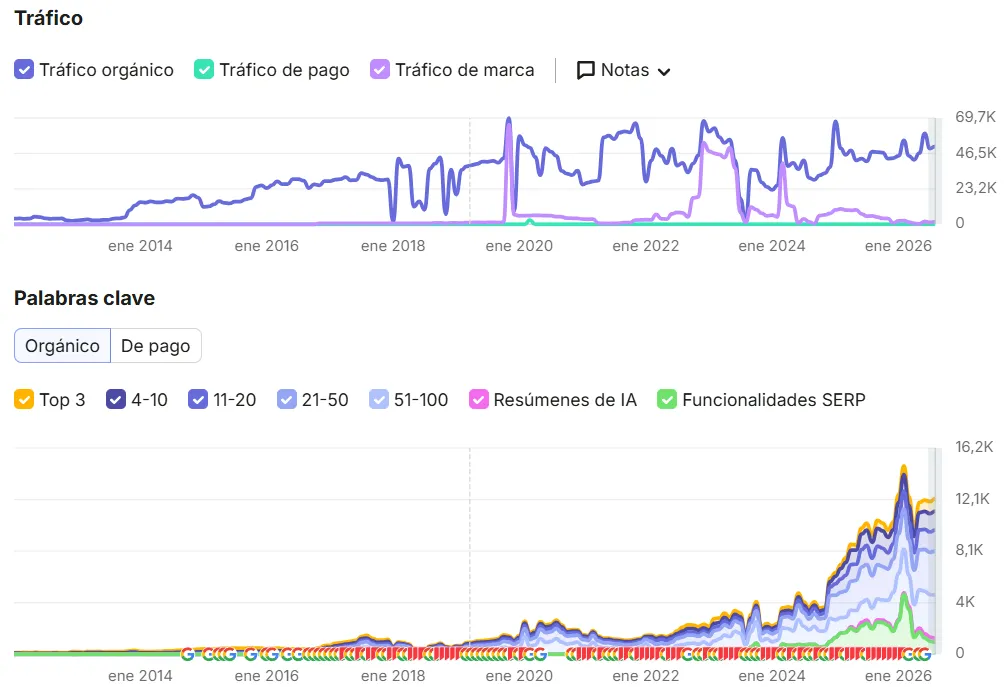
The city-by-city structure is published and can be walked through, and the domain’s organic visibility grows year after year.
- 23 citiesworked from a single expansion strategy.
Konevent
Booking and operations SaaS
- Experience
- Technology
What we could see
An events venue wanted to stop reconciling its bookings, its time slots and its capacities by hand.
What was actually happening
The next venue was run differently: other time slots, other capacities, other rates and another way of taking the deposit. A tool built for one did not serve the next, and a generic one served none.
The decision
We did not put a booking website on top of the management that already existed. We built a product able to absorb those differences as configuration, with a single availability: the one the customer sees is the one the company manages.
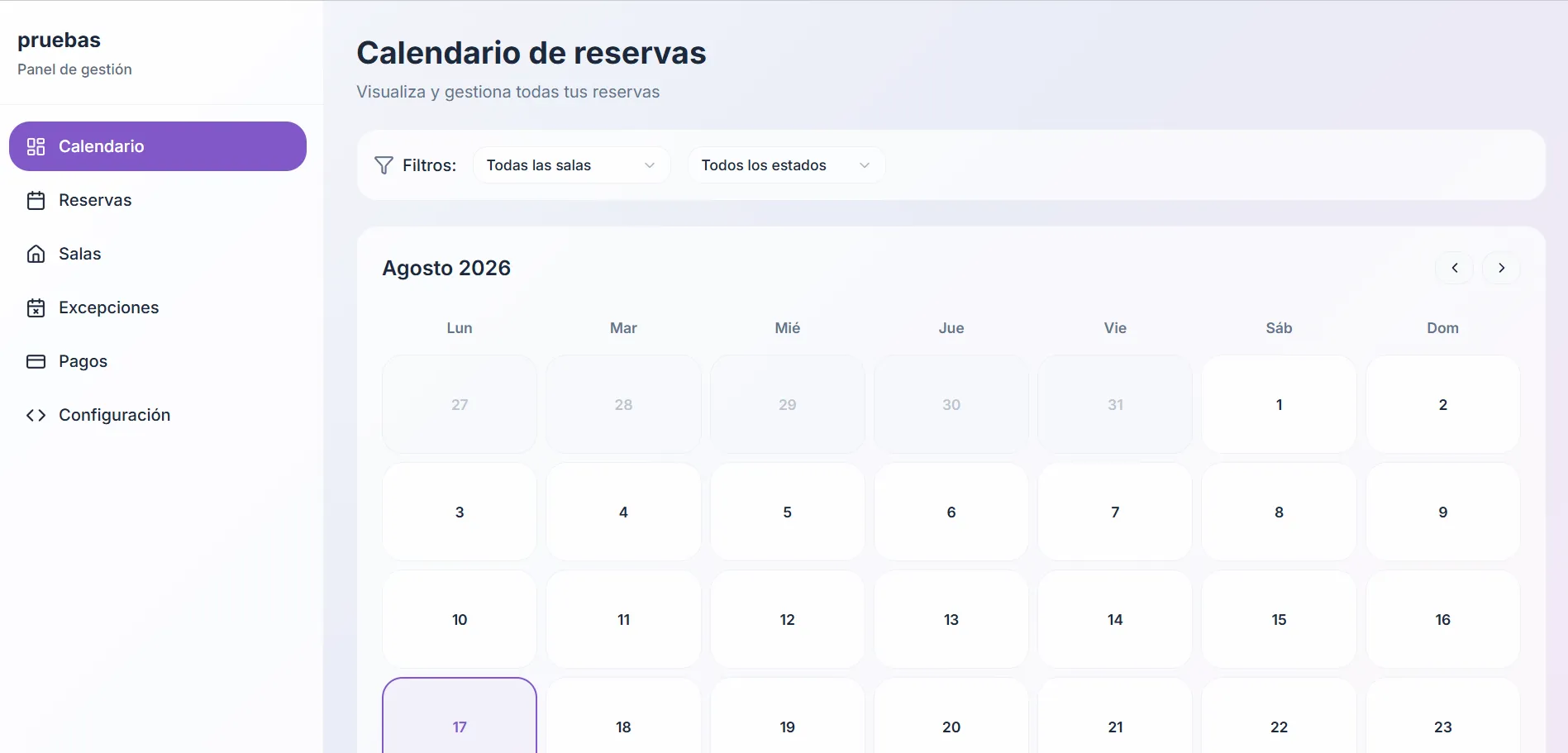
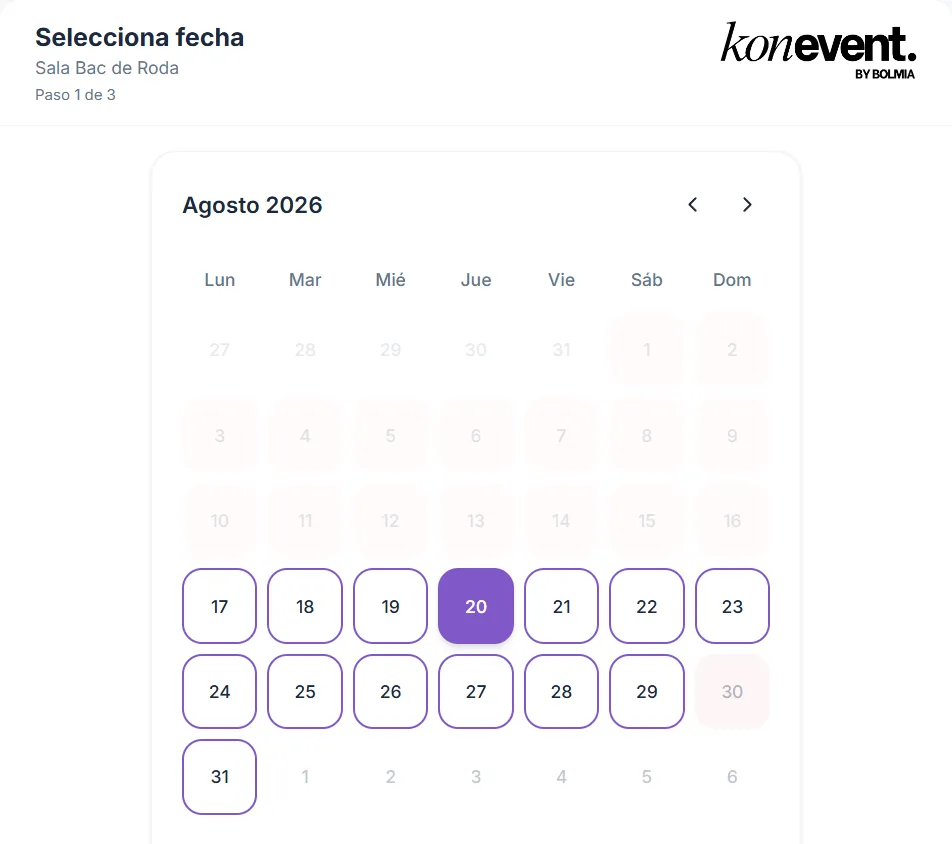
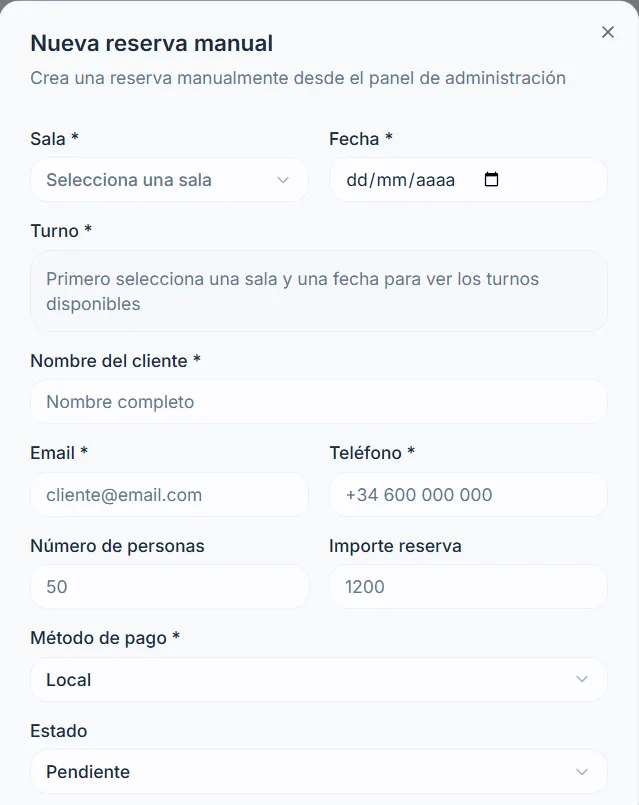
The same booking, from the three places it exists in: a customer picks it, the team sees it, and whoever answers the phone can create it by hand.
- +200 companiesrely on Konevent month after month.
Real screenshots of the product, with demonstration data.
Obrescat
Renovation company in Barcelona · Acquisition and a custom operating system
- Growth
- Experience
- Technology
What we could see
They wanted more work. Roughly one organic lead a week was coming in.
What was actually happening
There were two problems and only one of them was visible. Acquisition could be worked on; what could not was knowing which projects were worth winning: quotes lived in a folder, costs in email, and the profitability of each project was only known once it was finished.
The decision
We did not stop at the website or at acquisition. We also decided the project would be the unit of the system: it is quoted, contracted with its target margin, costs are assigned to it and it is reconciled against the bank. The margin comes out of that on its own.
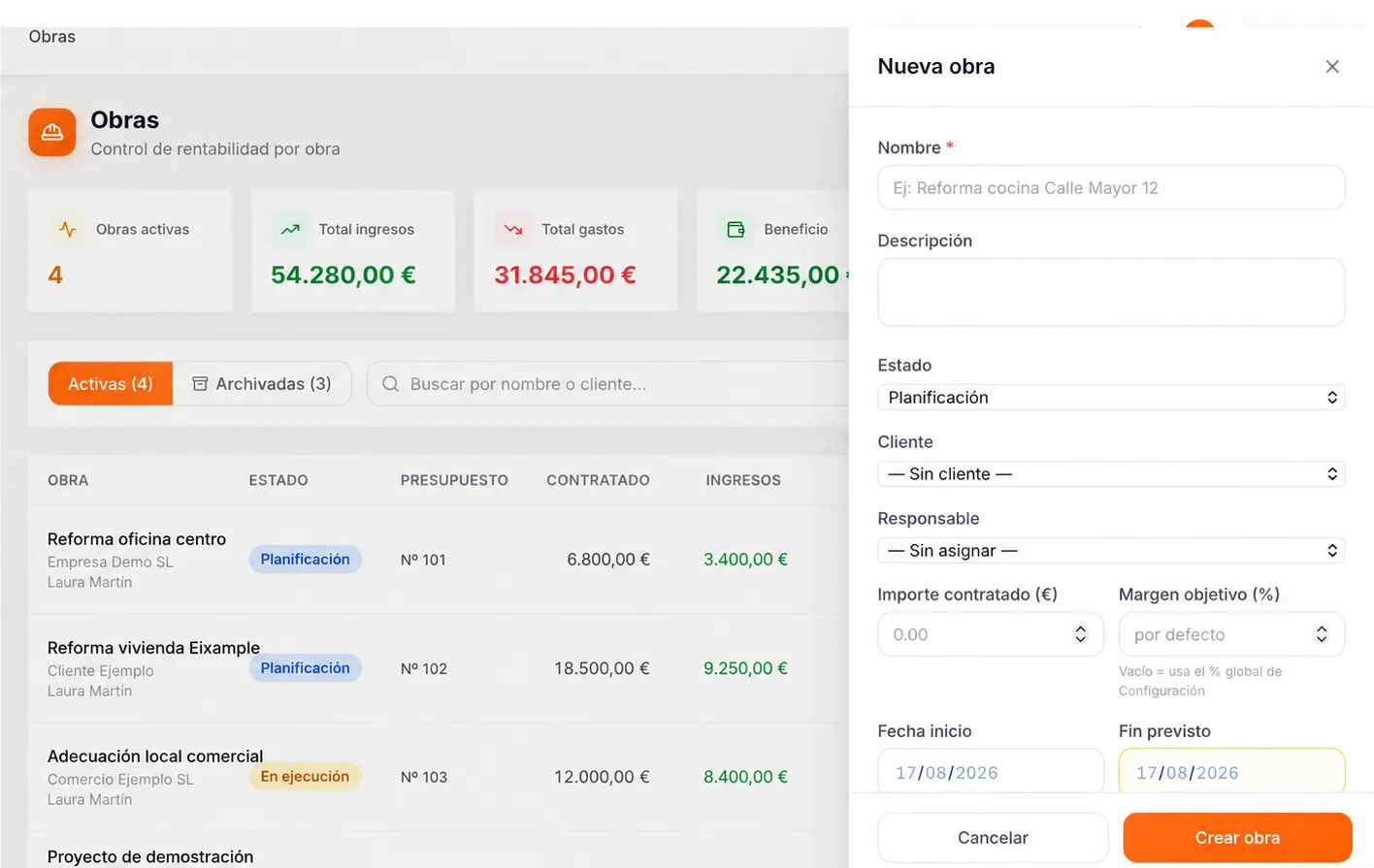
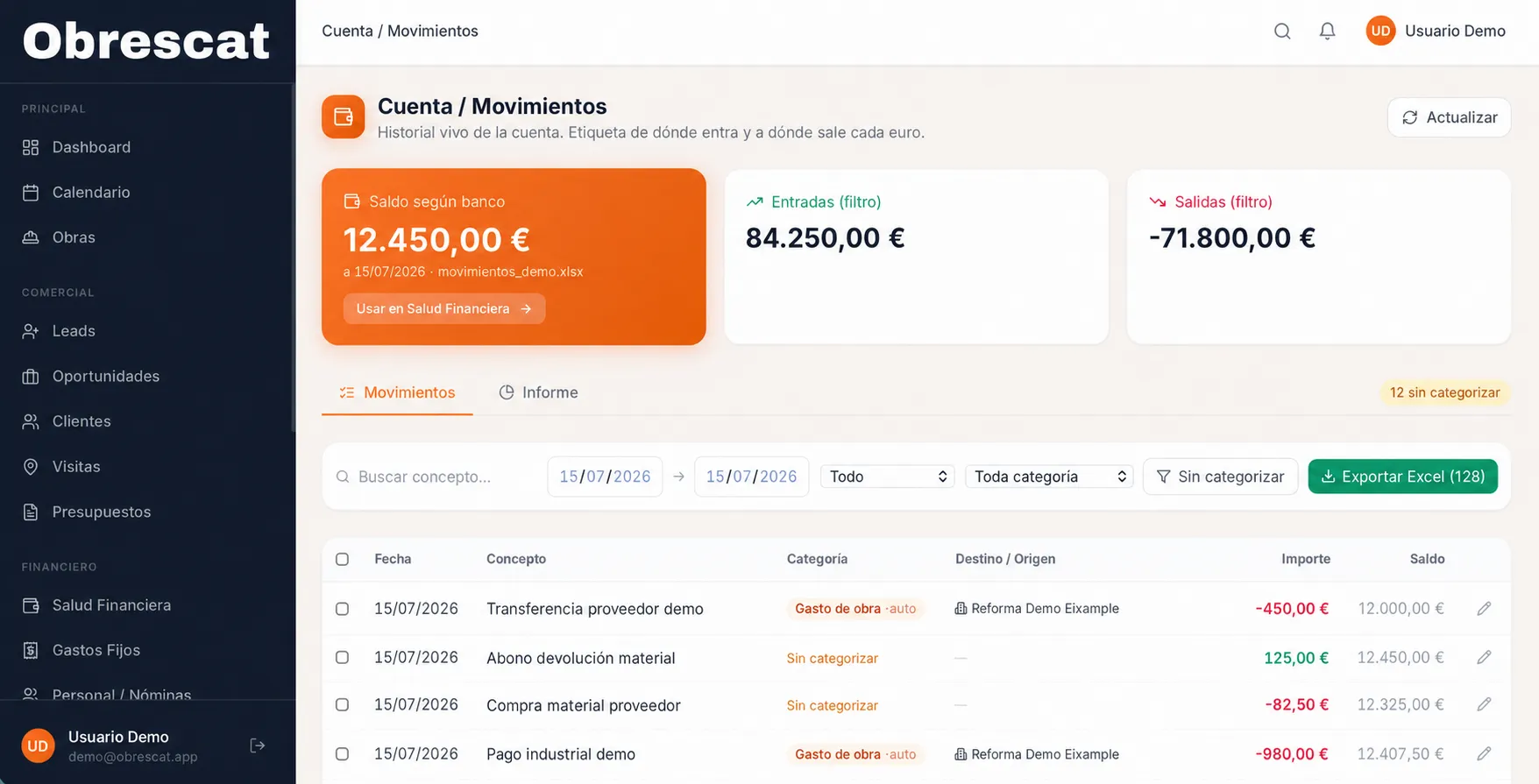
Every project has its profitability in view on any given day, and every bank transaction knows which project it belongs to.
- 2–3 organic leads a daycompared with roughly one lead a week at the starting point.
Real screenshots of the panel, with demonstration data.
Let’s talk
Tell us what you need to work better.
You do not need to know whether the answer is SEO, a website, software or automation. Tell us what is happening and where you notice something stops moving.